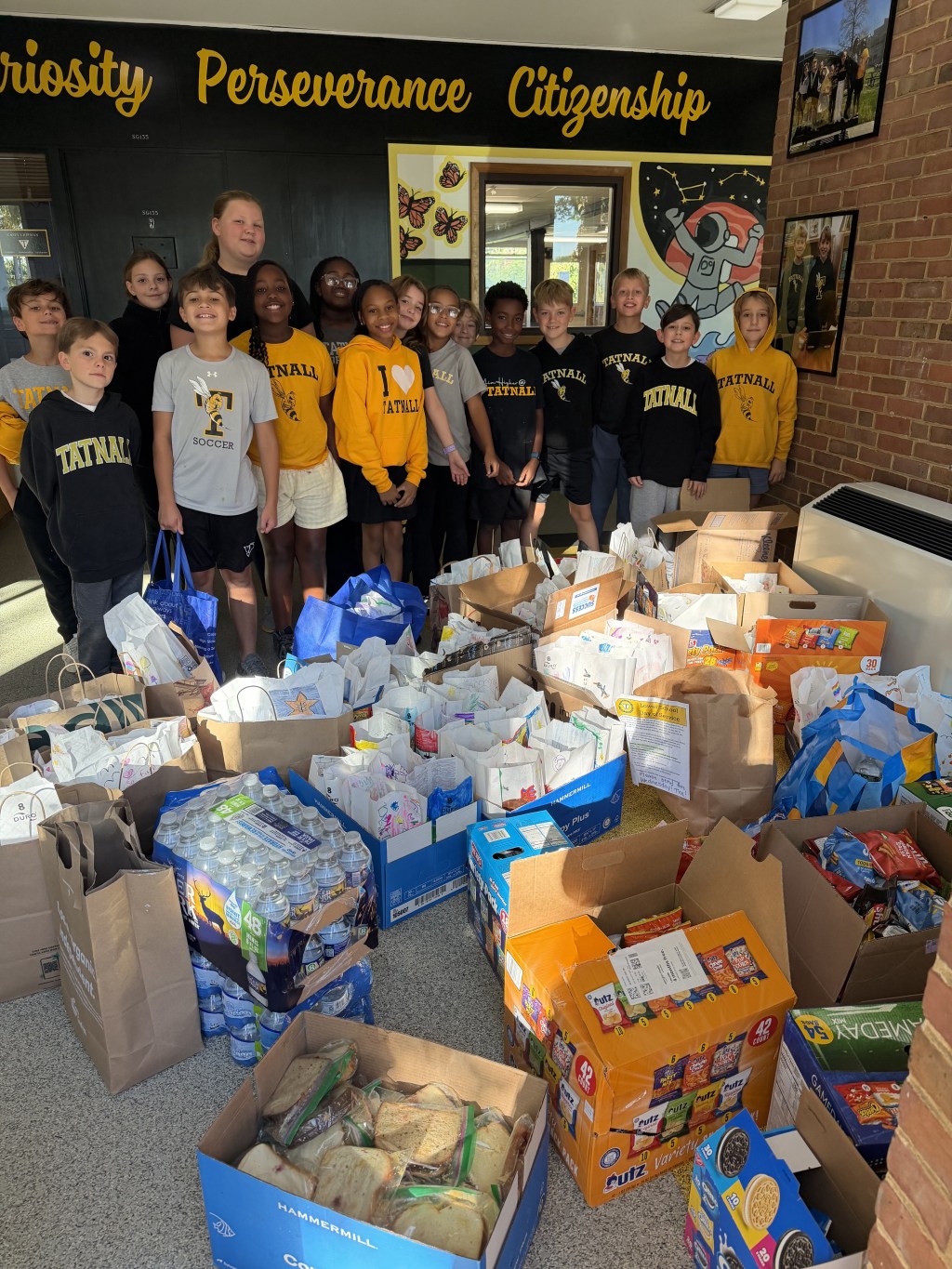
On Wednesday, we celebrated a campus-wide day of service at Tatnall. In the Lower School, that meant coming together to do something simple and important: make lunch for our neighbors.
Each grade level donated different items for bagged lunches for Emmanuel Dining Room in Wilmington. Our Upper Elementary students used the donated peanut butter, jelly, and bread to make sandwiches. Then, using bags decorated by our kindergarten through third-grade students, they packed each lunch with a sandwich, water, chips, fruit, and dessert.
When we finished, we loaded 200 bagged lunches, along with all of the extra food and supplies, into one of our parent representatives’ cars. And when I say that car was packed, I mean it was VERY packed.
I keep thinking about how many people had a hand in filling that car. Families who added something to their grocery lists. Children who decorated bags. Students who made sandwiches and assembled lunches. A parent who made the delivery possible. Each person contributed something, and together, those contributions became 200 lunches for people in our community.
There is a reason a day like this matters so much, both to the people receiving those lunches and to the children making them.
Jennifer Breheny Wallace, author of Never Enough and Mattering (this month’s Happy Hour Bookclub), has written extensively about the research on “mattering.” Mattering means feeling valued for who we are and knowing we have something valuable to contribute. We need to know that we matter to the people we love, and we need opportunities to see that our presence and actions make a difference in our families, our communities, and the world around us. Both pieces are important: being cared for and being able to offer care in return.
As parents, we spend so much time making sure our children know how deeply we love them. We celebrate their growth, encourage them through struggles, and remind them that we are always in their corner. Days like Wednesday give them a chance to experience the other part of mattering. They get to see what they can offer.
A child can look at a finished lunch and recognize their part in it. They decorated that bag. They made that sandwich. They helped make sure someone would have something to eat. That is a very concrete way to understand an idea that can otherwise feel quite big: I can make a difference in someone’s day.
David Yeager’s work adds another layer to this conversation. In 10 to 25, he explains how young people, beginning around age ten, become especially attuned to being respected and taken seriously. His research points to the importance of treating them as capable people. For our oldest Lower School students, being trusted with meaningful work is one way we can put that understanding into practice. On Wednesday, their work had a real purpose and someone beyond our campus would benefit from it.
Of course, children’s worth is already there, before they pick up a marker or spread peanut butter on bread. Our job is to help them recognize that worth and discover the good they can do with it.
That discovery can happen at home, too. Helping prepare dinner. Calling a grandparent. Including someone who is sitting alone. We can help children notice the impact of those ordinary actions: you helped our family today; your call meant something to someone you love; you made room for another person.
I hope our children remember Wednesday. I hope they remember coming together, making sandwiches, and filling a car until there was barely room for anything else. And I hope that, someday, when they wonder whether they have anything to offer, they remember that their hands helped fill one of those bags.
That VERY packed car carried 200 lunches out of our school. I hope it left our children with something they can carry, too: the knowledge that they are deeply valued here, and that they already have something to give.





Leave a comment