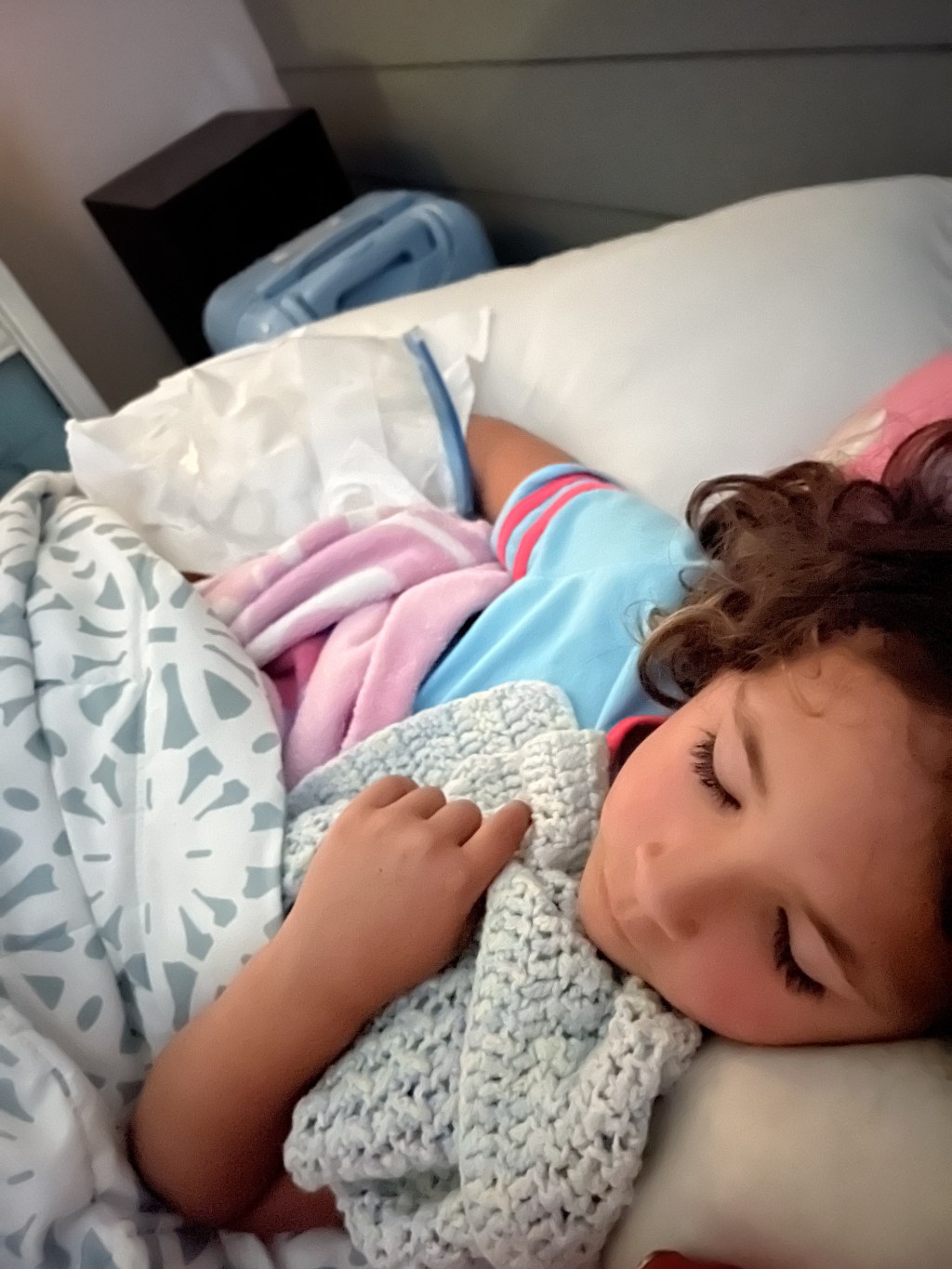
Let’s talk sleep. I say this from a place completely free of judgment. I have three children of my own, and I promise I’m including all three of them in this sweeping statement: mornings were rough this week!
We could blame the rain or the cold. But if we’re honest, our kids were tired. Maybe, just maybe, we were tired, too.
Being tired now and then is normal. Something keeps us up later than usual, we catch a bug, or we play a little too hard. The concern is when tired stops being occasional and starts feeling like the norm.
There are three reasons that being tired all the time concerns me: physical growth, emotional regulation, and memory consolidation.
First, physical growth. The body releases growth hormone during sleep. This hormone plays an important role in children’s growth, including the development of bones and muscles. Research with children has observed growth hormone release alongside periods of deep sleep. That does not mean one late night will affect a child’s height. It does remind us that sleep is part of the work a growing body does every day.
Sleep also helps the brain hold on to what it has learned. We call this memory consolidation: strengthening a new memory so we can use it later. Some of that work can happen while we are awake, including when our minds are at rest, but sleep has a particular role. In one study of children ages 9 to 12, children remembered newly learned information better after sleep than after a comparable period of wakefulness.
“Making memories” sounds sweet and idyllic, but it is also how children learn. A child spends the school day encountering new words, ideas, and skills. Sleep gives the brain time to strengthen the connections that help us remember what we have learned.
And then there is emotional regulation. I know that when I am tired, everything feels harder. I am quicker to snap at my children, quicker to tear up over spilled milk, and more likely to lose my train of thought. I see those patterns in my own children, too, and I have seen them in many of the children I have worked with over 20 years in education.
Research agrees with what so many of us notice at home and at school. In one study of children ages 8 to 12, researchers found poorer emotional regulation after just four nights of later bedtimes compared with four nights of earlier bedtimes. Sleep will not make every frustration disappear, but it can help children meet those frustrations with more capacity.
Here is the part that made me pause: how much sleep are we actually giving our children? The American Academy of Pediatrics recommends 9 to 12 hours of sleep per 24 hours for children ages 6 to 12. Let’s work backward from a 6:45 a.m. wake-up. If your child needs 10½ hours of sleep, the midpoint of that range, they need to be asleep by 8:15 p.m. Asleep, not just heading upstairs. If the whole routine takes an hour, that means starting at 7:15. And remember, the 9-to-12-hour recommendation includes 12-year-olds. Many children are still 12 in sixth grade, and some are 12 in seventh. Also, if you can make baths, pajamas, teeth, reading, and snuggles happen in an hour, what is your secret?
I know evenings are full. Ours are, too. I’m not suggesting that one late practice, family celebration, or hard night means we’ve failed our children. I am asking myself the same question I’m asking you: when we look at the whole week, have we left enough room for sleep?
Our children do so much growing, feeling, and learning each day. Giving them time to sleep is one way we care for all three.







Leave a comment