Every once in a while, the internet gives us a parenting trend that makes me pause mid-scroll and think, “Okay, this one might actually have something to it.”
This summer, that trend is the “’90s Summer.”
If you have not seen it yet, the idea is basically this: give kids a summer that feels a little more like the 1990s. I am a ’90s kid who grew up on a lake that was 3.5 miles around, with a stay-at-home mom. My summers looked like biking down to the lake, swimming all day, then running up to my mom for food; or, as I moved through middle school, avoiding my mom, biking or rowing to my friends’ houses on the lake for different food, and idolizing the lifeguards. At night, we all sat down and watched prime time together, racing to the bathroom during commercials and planning to do the exact same thing tomorrow.
Even with all of that nostalgia, I am not here to pretend the 1990s were some magical parenting utopia. We also drank blue sports drinks with ingredient lists that looked like science experiments, rode in cars without enough seatbelt enforcement, and thought sunscreen was optional. So, no, I am not suggesting we fully bring back 1994, both because some of it was not good and because, as a working mom raising kids in 2026, some of that just is not an option anymore.
But I do think this trend is tapping into something real.
We are not really craving Jell-O jigglers and digital music downloads that take four hours. We are craving a version of childhood that felt slower, freer, more social, and less constantly managed. And while we cannot fully recreate the summers we remember, the research does support many of the instincts behind the trend.
The research-based version of a “90s Summer” is not about banning screens or making parents feel guilty. It is about asking a better question:
What might screens, schedules, and constant entertainment be crowding out? In my house, they can crowd out outside time, movement, reading, boredom, sleep, face-to-face connection, family time, and small moments of independence.
The first “90s Summer” idea I love, and one that is supported by research, is what I am calling the “crowding back in” goal. Instead of making summer a daily screen-time courtroom where everyone is arguing their case, we can shift the focus. What are we deliberately adding back into the schedule?
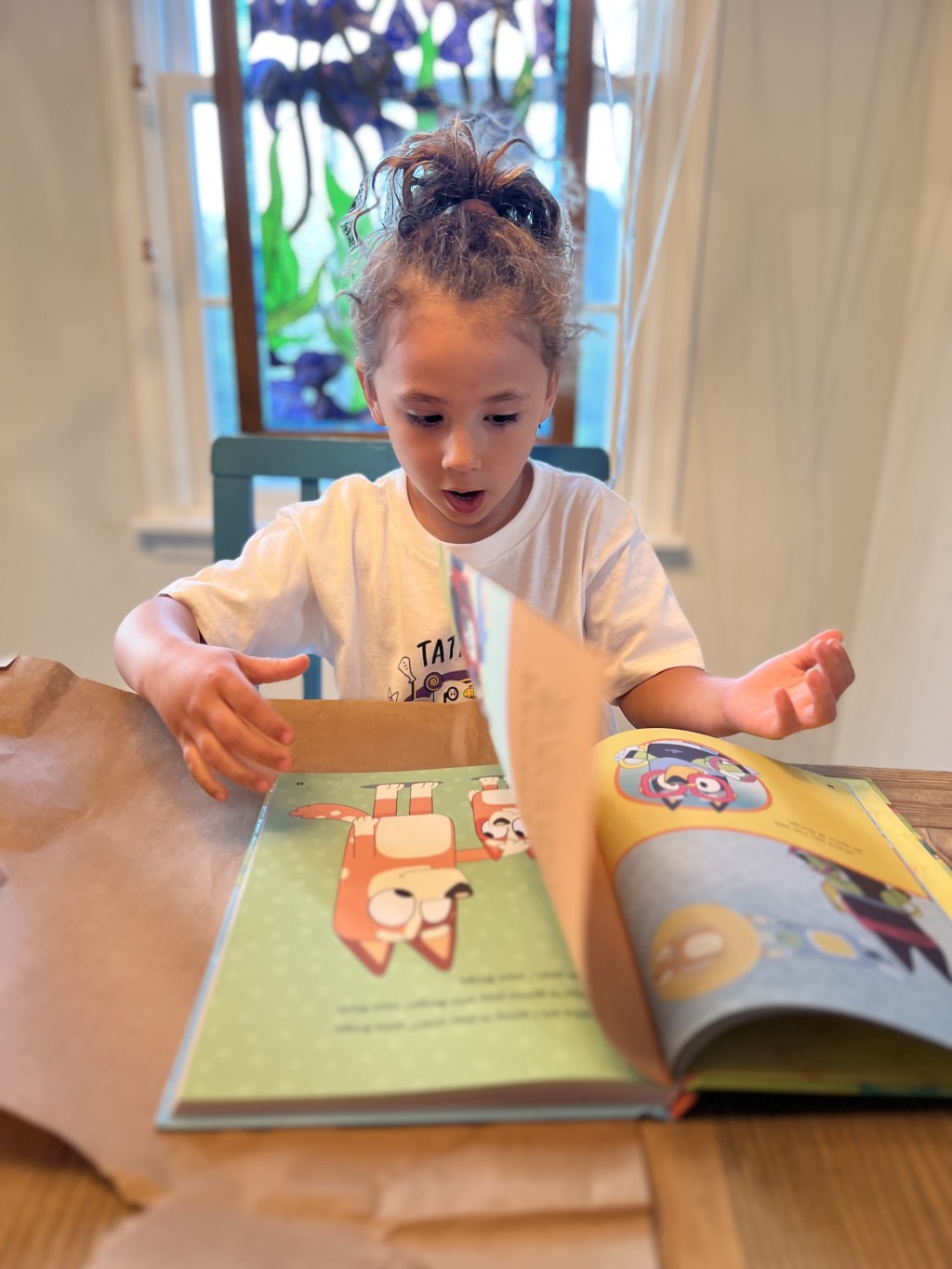
I am not even going to mention screens in these plans to my kids. This might look like a family walk after dinner or a set amount of time outside (Not a “don’t come in until the streetlights come on” mandate). It is just a reasonable goal that works for your family’s schedule. It might mean heading to the library to pick out books and leaving a basket of library books in the family room. Pool hopping, chalk art, bike rides, a puzzle on the table, letting your kids sleep in, or a family card game are all small things we can crowd into the day.
And the best part? They can crowd out screens without your kids fully realizing what you are doing.
This approach feels much more realistic to me as both an educator and a mom. It is not “no screens ever,” because we live in 2026 and I also enjoy a quiet house sometimes. It is simply this: screens cannot be the only thing holding the day together.
The second idea is a “safe enough independence” summer.
One of the things parents worry about right now is that children seem less independent than we were at their age. And that worry is not coming from nowhere. Many children today have fewer chances to do ordinary things on their own: order at the snack bar, walk ahead on a safe path, pack their own bag, make a simple snack, call a friend, solve a neighborhood problem, or manage a little boredom without an adult immediately stepping in.
The key phrase here is “safe enough.” Not unsupervised in ways that make no sense for your child, your neighborhood, or your family. Just small, developmentally appropriate chances to practice. Think of this like an independence ladder:
Step one: your child does it right there with you.
Step two: your child does it while you watch from a distance.
Step three: your child does it and reports back.
That might look like ordering their own ice cream while you stand nearby. Then ordering while you wait at the table. Then ordering, paying, and coming back with change and a very proud face.
These little moments matter. They build confidence, problem-solving, responsibility, and the internal message, “I can do things.”
The third “90s Summer” idea I am leaning into this summer is “boredom before rescue.”
This one is hard for me because “I’m bored” can grow increasingly louder and more persistent. It can make us feel like we need to fix something, offer an activity, suggest a craft, or produce a Pinterest-worthy memory, all in the name of being a great parent or a parent who just needs a little bit of quiet.
Do you want the good news and the bad news? The good news is that research does not say we need to entertain our children every second. In fact, unstructured time, mind-wandering, and space to develop their own ideas can support creativity, problem-solving, and self-direction. Boredom can be the doorway to creativity. It can be the beginning of problem-solving. That does not mean we abandon them to misery. We can create the conditions. We can have books, art supplies, Legos, balls, chalk, journals, puzzles, water play, or baking ingredients available. We can make a “boredom menu” before summer gets messy.
The bad news is that boredom is often the uncomfortable space children have to move through before they find their own idea. When your children say, “I’m bored,” you can say something calm and wildly annoying like, “That’s okay. I trust you to find your first idea.”
Will they love this response? Absolutely not.
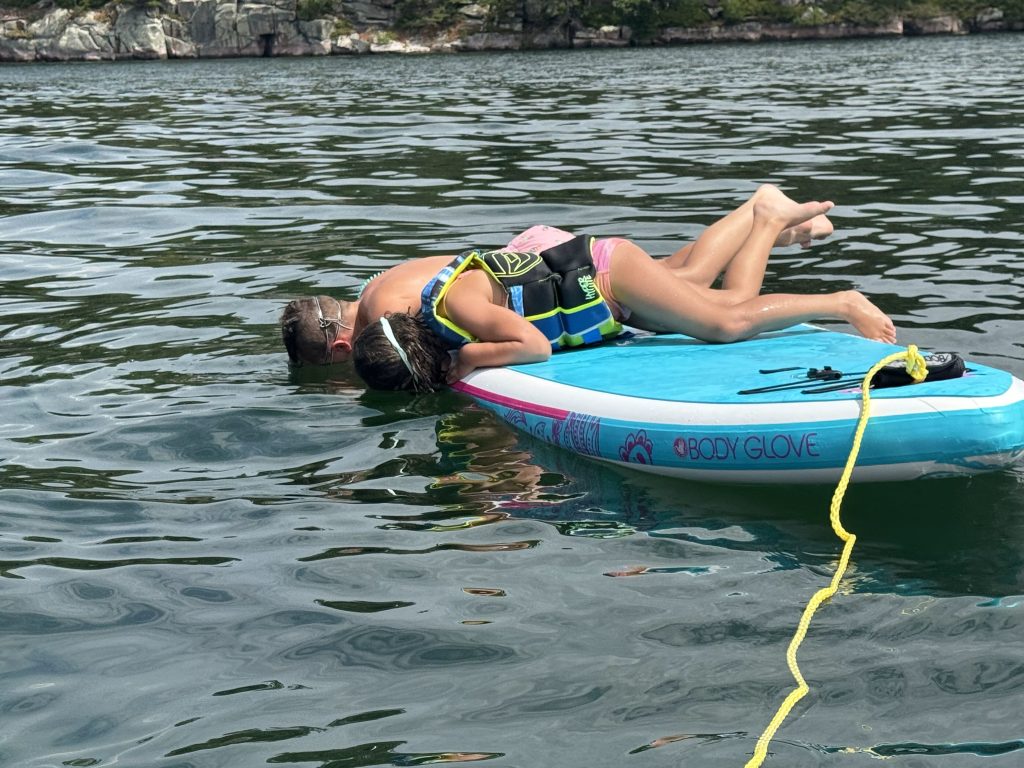
Will they sometimes flop dramatically on the couch as if no child in history has ever suffered more? Yes.
But if we rescue too quickly, children never get to the good part. They never get to discover that after the boredom comes the fort, the game, the story, the bracelet business, the backyard obstacle course, the made-up restaurant, or the book they suddenly cannot put down.
This is where I think the “’90s Summer” trend has something to teach us, if we translate it wisely.
We do not need to recreate our childhoods. Maybe we can borrow a few memories, but we do not need to recreate the whole thing. Our children are growing up in a different world, and pretending otherwise is not helpful. Many of us are working. Many children need more structure. Many families are juggling camps, childcare, travel, sports, and real-life logistics. A slower summer should not become one more impossible standard.
But we can protect pieces of real life. We can crowd back in what matters. We can give children small chances to be capable. We can let boredom breathe for a minute before we rush in with a solution.
I often talk about joyful excellence, whole-child growth, and helping children become confident, capable, curious people. Summer can support that too. Not through perfection, a color-coded schedule, or a full return to 1994. Through a little more outside, a little more reading, a little more “you try first,” and a little more trust that childhood still knows what to do when we make room for it.
And if that happens to include a sprinkler, a bike helmet, a library card, and a popsicle dripping down someone’s arm, even better.



Leave a Reply