I truly have the best view on campus.
When I sit at my desk, I look out over the Sedgely lawn. During recess, that means I get front-row seats to daily soccer and football games. There are dramatic goals, questionable penalties, passionate debates about fairness, and at least one moment a day when a child throws both hands in the air like they have just been personally wronged by the World Cup.
Typically, a teacher is nearby to “ref” the game when disputes pop up. Was that out? Was that a foul? Did the ball actually cross the imaginary line between the tree and the sweatshirt? These are the big questions of childhood.
Jonathan Haidt, author of The Anxious Generation, argues that children need more freedom and less adult intervention in their play. I agree with him. And yet, when we pull adults too far back, we sometimes see more injuries, more tears, and more conflict. So I find myself constantly wondering, both as an educator and as a mom, where is the line between hands-on, hovering, and hands-off?
Haidt writes about what he calls the “great rewiring” of childhood, caused in large part by technology, but also by a generational shift toward more protective parenting. Children today have less independence than children did 25 or 50 years ago. Many of the things that once felt normal, walking to a friend’s house, playing outside until dinner, climbing too high in a tree, organizing a neighborhood game without a single adult present, now feel risky, complicated, or even impossible.
And our children have lost something in that shift.
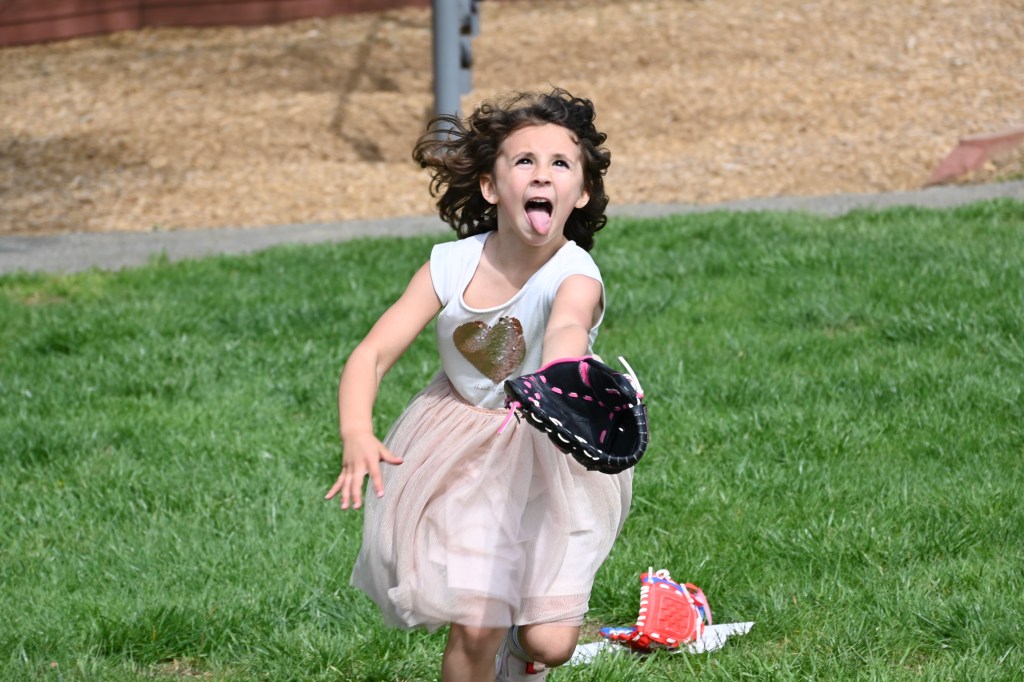
They have lost some of the grit that comes from figuring things out without an adult immediately stepping in. They have lost some of the practice of negotiating rules, solving disagreements, and deciding whether something was actually unfair or just mildly annoying. They have lost a lot of the big-body sensory play that used to happen after school when children would swing through the house for a snack and then head right back outside to run, climb, bike, build, explore, and, gasp, play a pick-up game without a coach, referee, or parent on the sidelines.
We did that as elementary school students. Not as high schoolers. Not as “when we were old enough.” We did it when we were little.
Today, many children leave school and head straight to club sports practices where they train hard under the watchful eye of elite coaches. They learn rules, systems, and strategies, which can be wonderful, but those same rules do not always belong in a recess game with a sweatshirt goalpost and seven children who may or may not all be playing the same sport.
Then they eat dinner in the car, head to another activity, complete homework, and navigate screens where they can watch whatever they want, FaceTime friends, or play video games. There is less big-body play. Less decision-making. Less boredom. Less invention. Less wonder.
Haidt’s argument is that this shift has affected children’s mental health in profound ways. I agree. And I would add that it has affected recess in profound ways, too.
So what can we do at home to support both our children’s mental health and their ability to play well at school?
First, we may need to schedule, which sounds ridiculous, free time.
Our children need time after school to play with other children in person. Not while chatting through a headset. Not while logging into the same video game. In person. They need time when the game is not organized by adults and the rules are not printed on a league website.
This does not mean sending very young children into the world unsupervised. A two- or three-year-old should not be wandering out of eyesight in the name of independence. But as children grow, they need age-appropriate chances to explore just beyond our immediate reach. That might mean the backyard. It might mean the playroom. It might mean a park with you sitting far enough away that they are truly managing the play themselves.
The key is that it needs to last long enough for something to happen.
They need enough time to get bored, invent a game, disagree about the game, change the rules, take a little risk, solve a problem, and keep going. There cannot be a screen filling every pause. There has to be room for imagination, frustration, movement, and negotiation.
We can also help our aspiring elite athletes understand that pick-up games have different rules. A recess soccer game is not a tournament game. A backyard football game is not the Super Bowl, though some of the celebrations may suggest otherwise.
We can teach children about “house rules.” We can teach them that every group has to name the rules before the game starts, and that there is integrity in honoring those rules once play begins. We can help them understand that not every disagreement needs an adult, and not every unfair moment is an emergency.
At school, we will keep doing our part. We will keep supervising. We will keep helping children stay safe. We will keep stepping in when we need to. But we also want children to build the muscles of childhood: resilience, flexibility, creativity, independence, and the ability to work things out with one another.
And this summer is the perfect time to begin.
Give them time outside. Give them time with other children. Give them time without a screen. Give them time to create a game that makes absolutely no sense to any adult watching, but somehow makes perfect sense to them.
Because childhood needs some room to breathe. It needs scraped knees, made-up rules, wild laughter, and the occasional debate over whether the ball was in or out.
And if you are lucky enough to overhear the argument from a distance, try not to jump in too quickly. Take a breath. Let them try.




Leave a Reply