“Everyone else has one.”
“Everyone else gets to go.”
“Everyone else is allowed.”
“Everyone else…” insert literally anything here.
It is a sentence every parent hears at some point, and usually at a moment when we are least emotionally prepared to respond with our very best parenting. Like in the car, while making dinner, or while trying to find the missing sneaker that was absolutely “right there” five minutes ago.
And while the statement is almost never fully accurate, there is actually a research-backed reason children say it with such conviction.
Human beings are wired for belonging. We need to feel that we matter, that we are known, and that we are part of something larger than ourselves. For younger children, that sense of belonging is most deeply rooted in parents, family, and trusted adults. As children grow, peers and group identity become increasingly important. That does not mean parents stop mattering, despite what a thirteen-year-old facial expression may suggest. It just means children are doing what humans do. They are looking around and asking, “Where do I fit? Who are my people? Do I belong here?”
This is one of the reasons traditions have such a powerful hold on us.
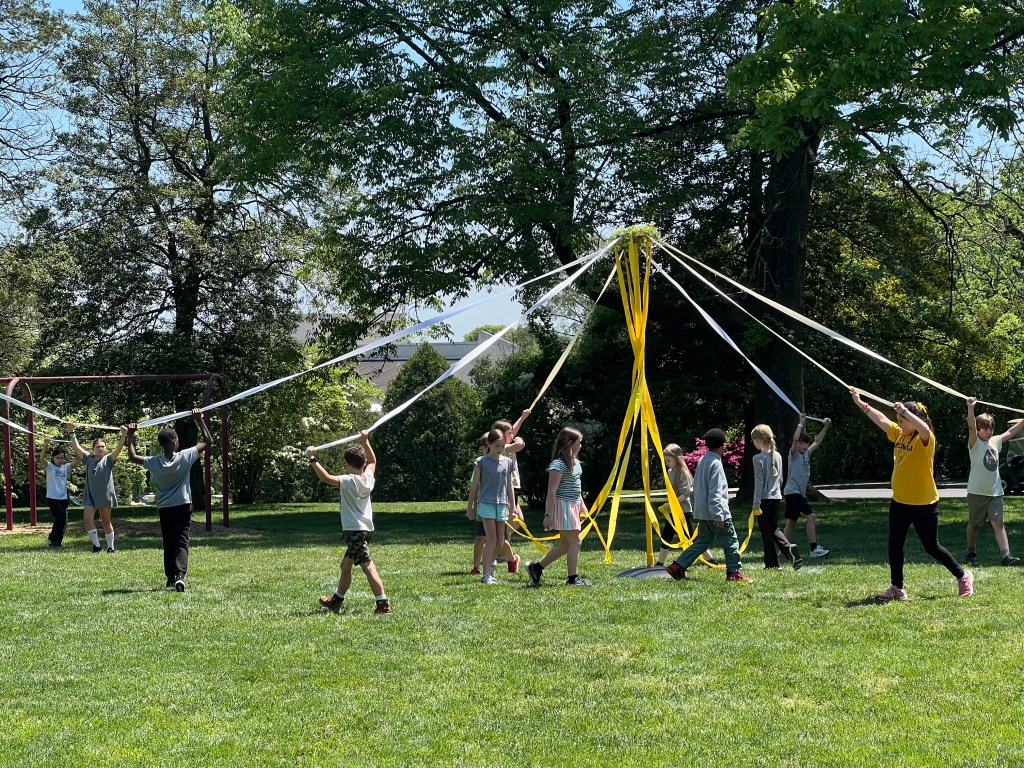
If you attended Tatnall at any point in our school’s history, you have been part of May Day. You, along with generations of students and families, belong to that group. The white dresses, the flower headbands, the Maypole itself, the families gathered around Sedgely Lawn, the younger students dancing with all the sweetness and seriousness childhood can hold, the fourth graders weaving the Maypole ribbons, and the Middle and Upper School students watching from the lawn as they remember when it was their turn. These traditions bind together those who came before, those who are here now, and those who will come after.
When my own children meet someone out in the world who learns they go to Tatnall, one of the first questions is often, “Do they still do May Day?” The person usually smiles, looks off for a second, and remembers. Nostalgia does funny things to our memories, of course. I am sure not every single moment of May Day preparation felt magical in real time. But the memory remains.
And for the rest of the day, my youngest will point to that person and say, “They did May Day, just like me.”
That is belonging.
You all know I have a hard time stepping away from the research, and, if I am being honest, I sometimes struggle to lean into traditions that take time away from academics. There is so much to do in Lower School. We are building readers, writers, mathematicians, scientists, thinkers, problem-solvers, friends, citizens, and confident independent scholars. The days are full.
But traditions like May Day are not separate from the work of school. They are part of the work of childhood.
They teach children that school is not only a place where they learn skills. It is a place where they are known. It is a place where they practice, prepare, wait their turn, cheer for others, feel nervous, try again, and eventually step into something that generations of children have done before them. That kind of shared experience builds confidence and pride. It creates joyful memories. It helps children feel rooted.
And when children feel rooted, they are more willing to stretch.
That is the beautiful balance of a place like Tatnall. We believe in academic rigor. We believe in strong foundations. We believe children are capable of deep thinking, hard work, and meaningful growth. We also believe children need joy. They need traditions. They need moments when they look around and realize, “I am part of this.”
Someday, our children may be the adults who smile when they hear the words May Day. They may be the ones asking the next generation, “Do they still do the Maypole dance?” They may remember the flower crowns, the music, the lawn, the nerves, the laughter, and the feeling of being surrounded by people who loved them into who they were becoming.
And I hope, tucked somewhere in that memory, they remember this too: before they moved on and up, they belonged here.



Leave a Reply