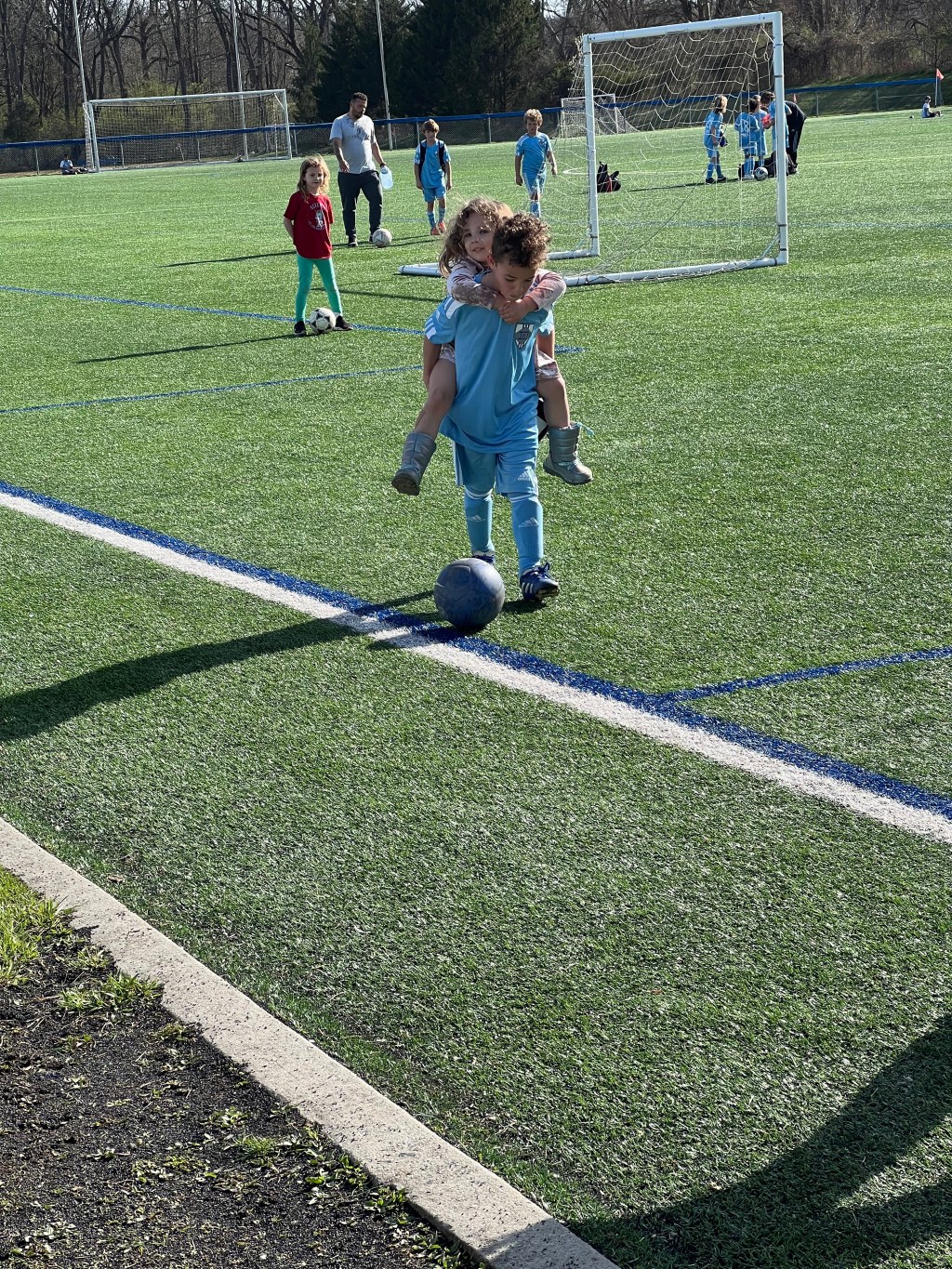
During conferences last week, my oldest was told to cut herself some slack and my middle was told to cut down on the chit chat. That tracks. My oldest has always held herself to an incredibly high standard, which is easier to do when you genuinely love learning. I won’t share details, because her friends read these blogs and she will be mortified, but “nose in a book” is her happy place. My middle? He can be found on a field. Not so much nose in a book as grass stains on the knees. He feels most competent in athletic competition. In other words, academic motivation is varied at my house. I kept wondering why, and whether there is anything I can do about it.
Decades of motivation research tell us that academic motivation tends to decline as students move up through the grades. So why is my oldest’s motivation still sky high while my middle’s is, let’s say, situational? A big piece is expectancy and value: kids are more motivated when they expect they can do something and when the “something” feels rewarding. In plain language, confidence drives effort. One of the best predictors of academic achievement is a student’s perception of their own academic ability. Students who maintain strong motivation as they get older typically have high academic self-efficacy, the belief “I can do this.”
What does that look like in real life? In Lower School, it might be a child stepping to the podium at Community Gathering, projecting their voice because they are confident they can read the words on the page. In Middle School, it might be a student taking the risk to show how they solved a math problem because they feel reasonably competent with the new skill. Low self-efficacy often sounds like mumbling, looks like avoidance, and feels like disengagement.
So how do we build high academic self-efficacy? Three main sources do the heavy lifting:
- Mastery experiences: When kids experience success, even small and well scaffolded wins, their “I can do this” voice gets louder.
- Opinions of others (sigh): Hearing an adult say that girls are great mathematicians and successful engineers makes a difference in how girls see themselves in math. Yes, the peer crowd’s opinion grows more important as kids get older. Deep sigh from every parent reading this.
- Feedback and context. Clear, timely feedback helps kids connect effort to outcomes. Context matters too. The classic big fish in a little pond effect can boost or deflate confidence depending on the pond.
One important note: self-efficacy is domain specific. A child can feel unstoppable in soccer and unsure in reading, or fearless in public speaking and tentative in coding. The goal is not to turn every child into the same student. It is to help each child find their lane and then widen it.
As parents who want the world for our children, often defined in the school years as academic success, what can we actually do?
- Protect their belief that success is possible. “I can’t” easily turns into “I won’t try.” That is the slope we avoid at all costs.
- Offer real choices. Choice builds ownership. If they want to read Dog Man, fantastic. They are reading, and volume matters.
- Name controllable causes. “You studied with focus, and that moved your grade.” When kids see cause and effect, effort becomes a lever, not a lottery ticket.
- Model growth mindset language. Not “I can’t,” but “I can’t yet.” Add the tiny word yet and watch persistence grow.
- Keep joy in the mix. Humor, games, and bite sized challenges at home remind kids that learning can feel good.
- Guard the relationship. You are both the parent and the safety net. A positive connection around school gives kids courage to try, fail, and try again.
At my house, it looks like creating small, steady wins that match who they are. For my oldest, I remind her that rest is part of excellence so she does not try to sprint a marathon. For my middle, I set up quick reading wins that feel as energizing as a perfect pass: short, high interest texts we read as a family, then we celebrate the finish line.
And about those conference takeaways. She was told to cut herself some slack. He was told to cut down on the chit chat. If we build their belief that they can, with the right choices, feedback, and a good laugh at the kitchen table, maybe she will practice relaxing that perfectionist grip, maybe he will dial back the play by play, and maybe I will cut myself some slack about the chit chat I do with other parents, occasionally holding up car line at pickup. Deal? If you see me holding up the line, feel free to give me the gentle wrap it up hand swirl. I will take the hint, smile, and keep the line moving (the apple doesn’t fall far from the tree…).







 Home
Home 
Leave a comment