I spend a large part of my day thinking about intelligence, aptitude, and expertise. I constantly wonder if our students are achieving at their highest potential. Are we accounting for all they already know? Are we guiding them toward expertise? I ask myself how we can help them be the best at X, Y, and Z, and at what cost? Even when I turn my work brain off, these questions follow me into parenting, especially in areas outside of academics, like sports.
Does natural aptitude in a sport equate to greatness? Does a lack of additional practice, private lessons, personal training, expensive club teams, lead to a loss of expertise over time? And then there’s the ever-present growth mindset question: Are you born smart, or can you become smart? I could swirl around these questions for hours.
Since I’ve pulled you into my rabbit hole this week, I did some research. What helped me the most was digging into the definitions of intelligence, aptitude, and expertise that researchers and theorists have largely settled on.
In 2005, Robert Sternberg defined intelligence as the capacity to learn from experience, using metacognitive processes to enhance learning, and the ability to adapt to the surrounding environment, which may require different adaptations within different social and cultural contexts. I love this definition. It tells us that intelligence isn’t a fixed thing, not a container that’s full for some and less full for others, but an ability. It’s the ability to learn from life, to recognize what we don’t know, and to apply strategies to fill in those gaps. It’s the ability to be flexible in thinking across different settings.
Hold onto that definition for a moment while we look at aptitude. The word stems from “apt,” meaning likely to perform in a certain way. When we use “aptitude,” we generally mean it positively, someone is likely to perform well in a particular skill or subject. Expertise, on the other hand, means being consistently capable of superior performance in a domain. Experts don’t just know more than non-experts; they also organize their knowledge in more sophisticated, abstract ways. This allows them to solve problems faster, rely less on working memory, and free up mental space to evaluate their own performance and make adjustments. Aptitude often develops because someone found something easy or enjoyable and kept doing it. Expertise, however, requires deliberate practice over long periods, whether enjoyable or not, and feedback from coaches or mentors who refine their skills.
So what does this mean for us as parents?
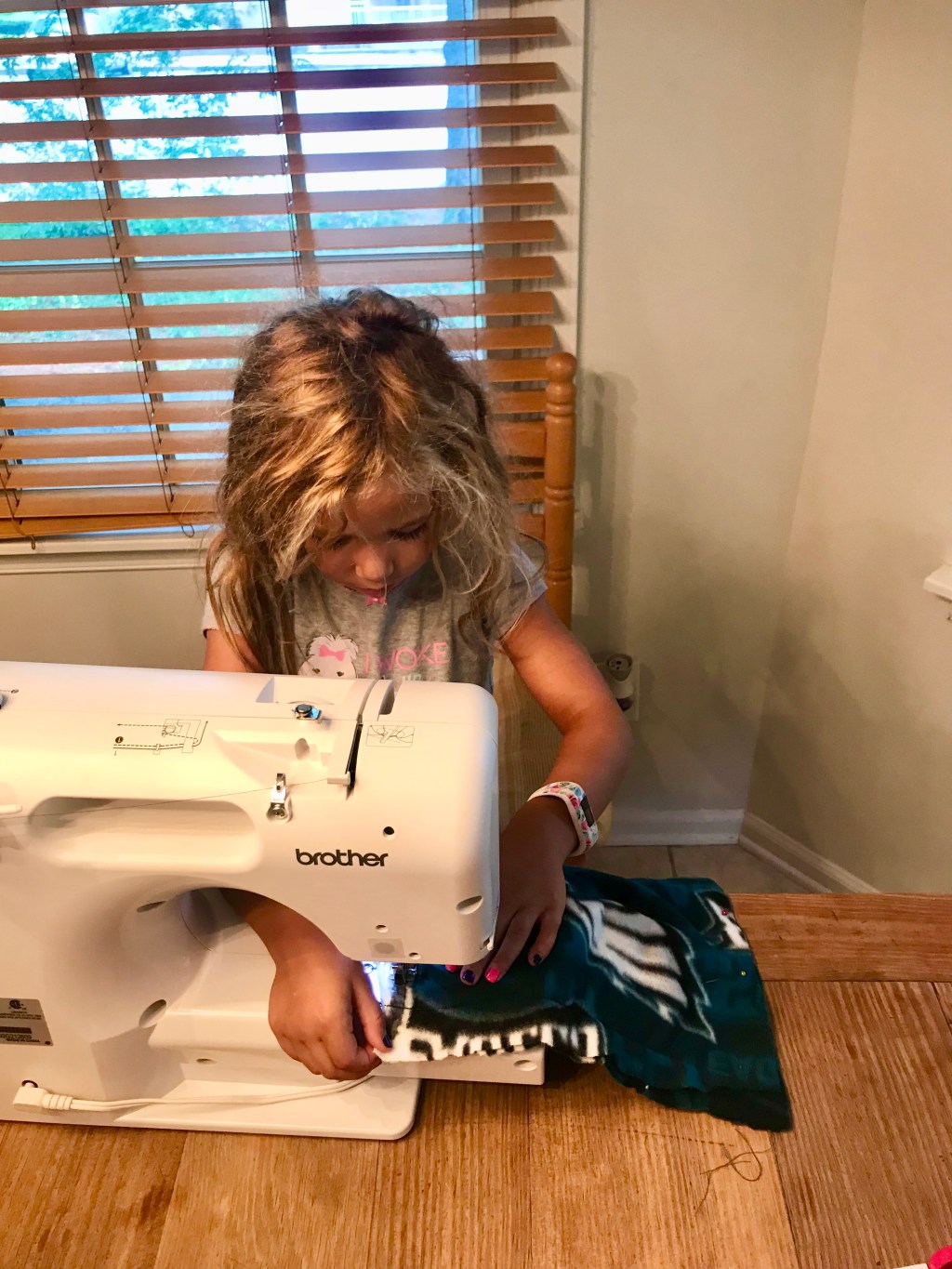
Lyla loves arts and crafts. She always has. She enjoys coloring, cutting, gluing, painting, and creating. The amount of tiny paper scraps I clean up is tremendous. Based on the above definition, I could say she has an aptitude for art, she generally does well with creative projects, and because she enjoys them, she improves through repeated practice. My older daughter, Audrey, was the same way. Since she was my first and we had more time, we leaned into this aptitude. At five, she took sewing lessons. She practiced daily and, before long, could shop for fabric, set up a sewing machine, and make pillows and stuffed animals. Today, she can make clothes and costumes. Some might call her an expert (for her age) in sewing because of the intentional practice and instructor feedback she received.
Now, let’s tie this back to intelligence.
Lyla wants to make a purse for her “treasures.” She observes my bags, examines her own, and studies their shapes and sizes. She sneaks into Audrey’s fabric drawer and sits at the sewing machine. She knows it needs to turn on, but she isn’t sure how. She watches, fiddles, and gives up on sewing a bag. Instead, she takes the fabric to the kitchen table and grabs glue, reasoning that glue works for paper. When the fabric doesn’t stick, she switches to paper, cutting it into the desired shape and gluing it together. It holds but doesn’t create enough space. She keeps adjusting, folding, taping, using yarn and boxes, until she gets it just right.
That’s intelligence. Lyla is thinking flexibly, applying all her life experiences to make decisions, troubleshoot, and problem-solve. Compared to her five-year-old peers, she might “score” high in intelligence for this kind of thinking.
So how do we, as parents, build intelligence, grow expertise, and foster aptitude?
We expose our children to as much as we can. We give them books to read so they can experience places and ideas beyond their reach. We take them on walks to observe. We introduce them to different cultures and honor differences in opinion. We invite them to solve problems alongside us. We ask for their thoughts and their “whys.” We listen. We offer feedback when they’re ready for it. We help them chase down their dreams. We encourage creativity and flexible thinking. We always ask for another way to solve the problem. We celebrate when they do it. We celebrate them.
And we remember that just because a child has an aptitude for something doesn’t mean they want to be an expert in it, and that has to be okay with us (yes, I’m talking to myself here). Parenting, like learning, is a process of adaptation, trial, and growth. The questions may never stop swirling, but maybe that’s the point, because in the questioning, in the wondering, we find new ways to support and challenge our children. And so, I find myself right back where I started, reflecting on intelligence, aptitude, and achievement. Except now, instead of just wondering, I remind myself of what truly matters—our children’s ability to learn, adapt, and think flexibly. That’s where the magic happens.



 Home
Home 
Leave a comment