It is no secret that my house has been caught in a germ vortex that we just cannot seem to escape. Every time I thought we were in the clear, one of my children would have an exceptionally emotional day, tears over the wrong color cup, dramatic sighs over the dessert I recommended, only to wake up sick later that night. Somewhere between Googling “stronger than Lysol and Clorox” and wondering if I should just quarantine us indefinitely, I started to notice a pattern: cranky attitudes seemed to precede stomach bugs.
While I didn’t find a direct link in the research (trust me, I looked), I did stumble upon an interesting connection, self-regulation.
Self-regulation is a bit of a buzzword these days, but at its core, it refers to a person’s ability to manage, control, or changes one’s thoughts, feelings, and actions in order to achieve one’s goals. We often talk about self-regulation in relation to kids who struggle in some way, but in reality, it’s a crucial skill for everyone. In a very oversimplified nutshell, a self-regulated person can set goals, plan, monitor progress, avoid distractions, stay calibrated (more on this in a moment), utilize metacognition, and learn from mistakes. Ideally, self-regulation improves from preschool through twelfth grade, except for that charming little dip between ages 10 and 13, thanks to a temporary decline in impulse control (it makes sense now, doesn’t it?).
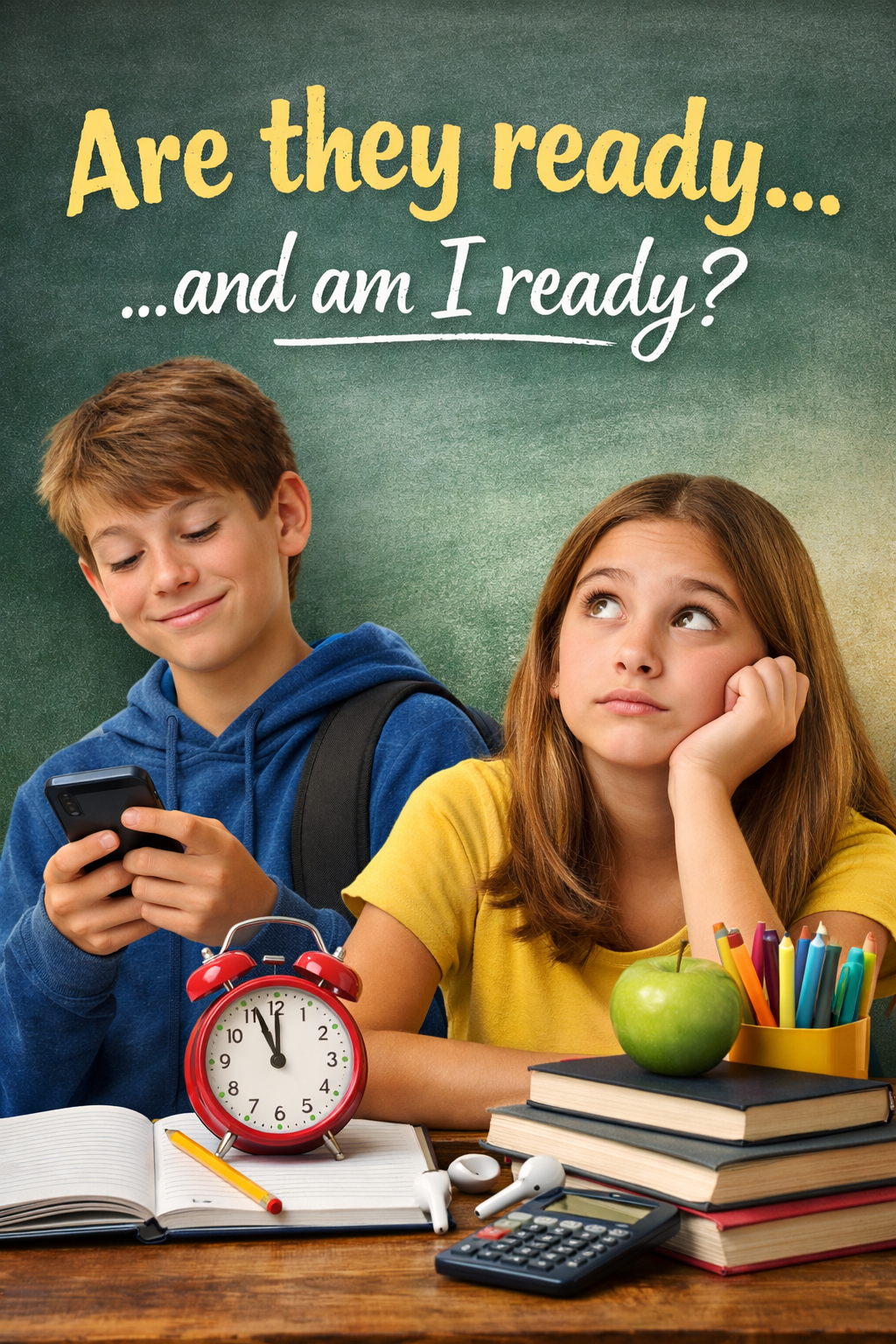
As an elementary school educator and a mom of three, I see kids struggle the most with two specific areas of self-regulation: calibration and metacognition. Calibration is all about perception. For older children, this might look like a mismatch between how they think they’ve performed in the past, how well they’ve actually prepared now, and how they expect to do in the future. Some kids get stuck in a cycle where one past failure convinces them they’ll never succeed. Others are so overconfident in their abilities that they don’t think preparation is necessary (spoiler: it is).
This ties directly into metacognition, or the ability to think about one’s own thinking. I see this all the time when a student sits at their desk (or in my house, at the kitchen table), staring at their paper, gripping their hair, and letting out several dramatic sighs. They know they don’t know how to solve the problem, but they also don’t know what to do next. It doesn’t occur to them to ask for help. On the flip side, some kids ask for help the second they see a problem, not realizing they already have the tools to figure it out on their own.
So, back to my original question, why were my kids so cranky before they got sick? Well, we know from research that self-regulation requires a ton of effort. It’s time-consuming, mentally exhausting, and can be downright depleting (think about trying to lose 10 pounds in your 40s… same energy). Kids spend all day at school managing their emotions, focusing on new concepts, and following social norms. If my child’s stomach was hurting all day, but they were working hard not to cry in class, they were using up a huge amount of self-regulation energy. By the time they got home, their reserves were empty, and suddenly, every minor inconvenience felt like the end of the world.
On a normal day, this might look like your child being extra sensitive or snapping at their siblings despite glowing reports of kindness from their teachers. Or the opposite, maybe something big is happening at home that’s requiring all their self-regulation, and they’re falling apart at school. The key takeaway? Self-regulation is like a gas tank, and when it’s empty, it’s empty.
So, what can we do to help our little (or big) ones? First, we can model self-regulation skills ourselves. We can structure our children’s environment, so their self-regulatory abilities aren’t constantly maxed out. We can also provide strategies, like making a checklist or taking a moment to pause before reacting. And finally, perhaps the hardest for us as parents, we need to resist the urge to helicopter. We have to step back, little by little, and give our kids the space to practice these skills. Because if they can learn to regulate their emotions now, maybe, just maybe, next time they’re about to get sick, they’ll just tell us their stomach hurts instead of bursting into tears over a misplaced sock.



 Home
Home 
Leave a comment