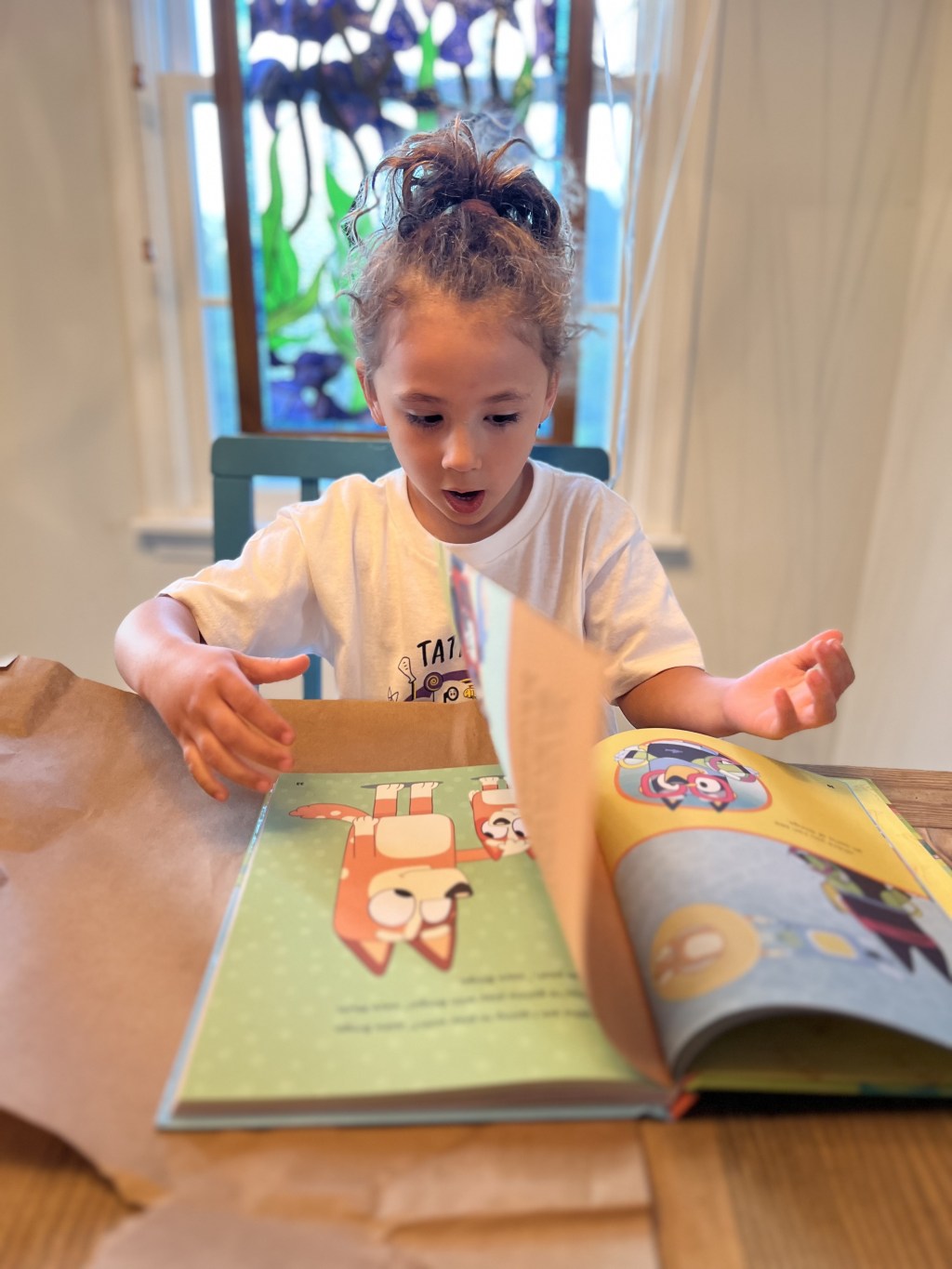
We have a ton of books in our house. I love a good book, and I just don’t have it in me to say no when one of my kids asks for one. As Audrey and Nolan outgrow their favorites, Lyla’s collection keeps growing… and growing.
Some of her books are truly fantastic, beautifully written stories with rich vocabulary and engaging characters. These are the nights I love. We snuggle in, talk about the characters, look at the pictures for extra clues, and try out new words.
And then… there are the other nights.
The nights when Lyla picks an I Spy book or some other activity book that requires me to squint at a cluttered page and locate a dinosaur drinking a hot drink. Listen, I love my kids, but when I’m tired and my eyes are crossing, no, I do not want to find that dinosaur.
So, what do we do when our child is obsessed with books that feel more like a scavenger hunt than a bedtime story, especially when we know they need exposure to high-quality literature to keep their reading skills growing?
The Secret: Shift Your Focus to Print Awareness
The good news? You can make even the least literary book a valuable learning experience by focusing on print awareness, a key early reading skill. Print awareness helps children understand how books work, what words are, and how letters function in written language.
Lauren Justice, an expert in emergent literacy, once said:
“What young kids know about print is crucial. Some would argue it’s a universal cognitive requisite for learning to read across any culture or language system. We’ve also found that it’s causal to future reading. Kids who know about print become better readers in the future.”
In other words, understanding print lays the foundation for reading success. So, instead of asking comprehension-based questions like “What happened in this story?” try shifting the conversation to print-focused questions.
Easy Ways to Boost Print Awareness
Print Conventions (How Books Work)
Where is the front of this book?
Show me which way we read.
What do you think the character is saying in this speech bubble?
Concept of Word (Recognizing Words in Print)
Show me just one word on this page.
How many words do you see here?
Where is the first word on this page?
Alphabet Knowledge (Letter Recognition)
Can you find the letter B on this page?
Do you see any letters from your name?
What two letters in this word are the same?
Can you find a capital and lowercase version of the same letter?
Turning I Spy into I Read
Essentially, you’re turning the I Spy game into something that builds real literacy skills. So the next time your child insists on reading an activity book, a board book they’ve long outgrown, or a book with zero storyline, don’t stress! Just switch gears and make it about print awareness.
And if you do happen to find that dinosaur with the hot drink, congratulations… you win bedtime!



 Home
Home 
Leave a comment