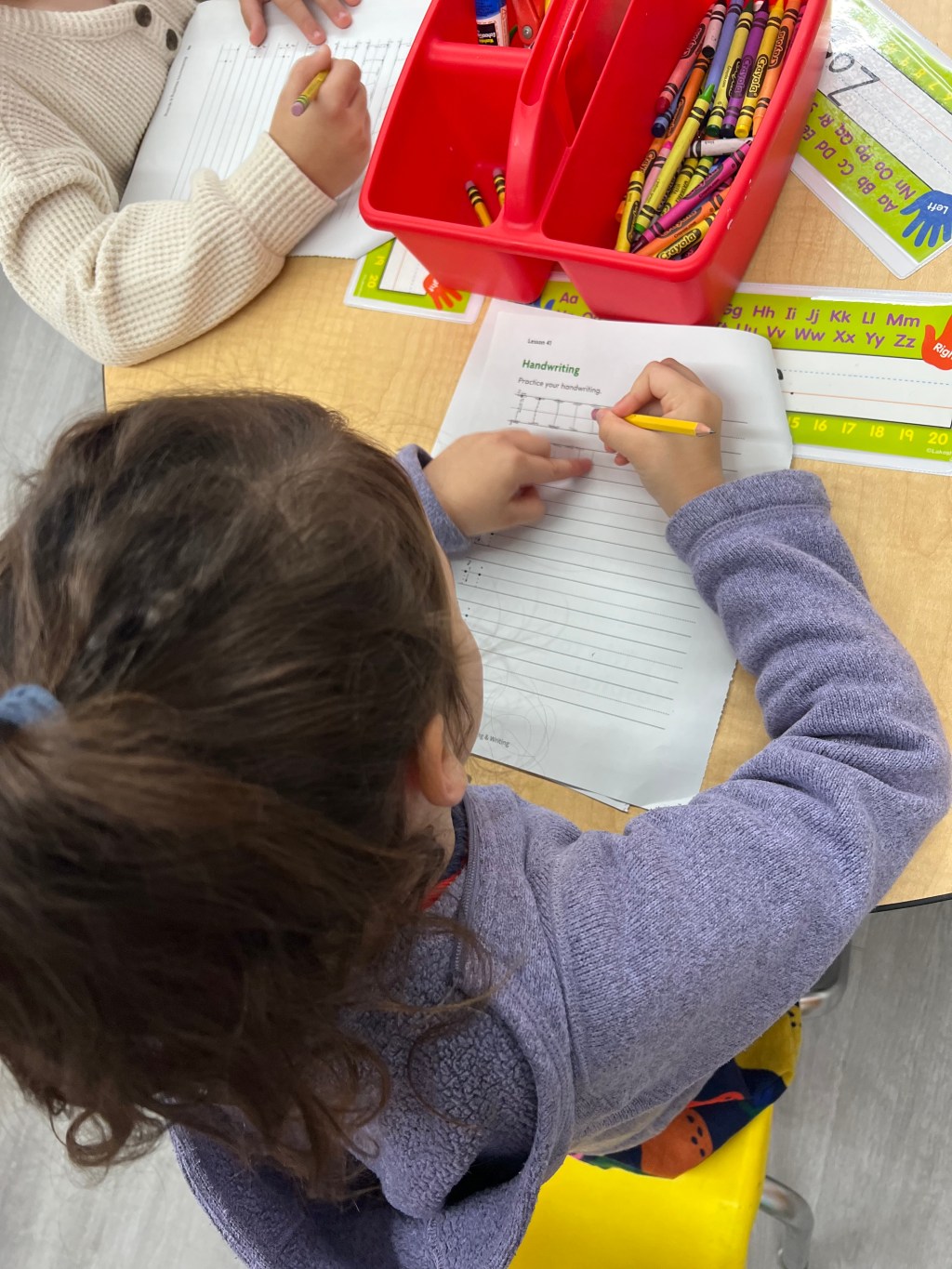
I have a confession from my years as a teacher: handwriting was the first thing I’d skip when the day got too packed or classroom behavior took a turn. It seemed like the least important part of our schedule, a task that could be put off until another time. I focused instead on helping students generate ideas and organize their thoughts, underestimating the impact of handwriting. Now, after learning more, I realize how critical it truly is. The research is clear: handwriting is just as important as the rest.
Here’s the thing, just like reading, when basic skills become automatic, kids can focus on the bigger tasks of developing and communicating their ideas. But when basic skills like handwriting require a lot of mental effort, it drains the brain’s energy, leaving less room to think up ideas, form sentences, and focus on the content. Let’s break down what’s involved in writing even a single word.
Take the word “cat.” First, you have to think of the word. Then, you need to remember how to spell it. This might mean stretching out each sound in isolation if you’re an emerging writer. After identifying the first sound, you must remember which letter represents it. Then, you need to recall the shape of that letter. Next, your brain musto tell your hand to pick up the pencil and draw the shape in the correct size and location on the paper. And then, repeat two more times. All that just to write “cat”! Most of this happens on autopilot for adults, but for kids, it’s a slow, tedious, and even exhausting process.
How Can We Help Build Strong Handwriting Skills at Home?
- Build Gross and Fine Motor Skills: Kids need strength in both fine and gross motor muscles to write comfortably. Activities like coloring, painting, digging, and climbing build the muscles that support handwriting.
- Check Pencil Grip: Encourage a relaxed grip, with the pencil held between the thumb and forefinger and resting on the middle finger. A grip that’s too tight or too loose can lead to hand fatigue or shaky letters.
- Focus on Efficient Letter Formation: Watch to see if your child is “drawing” the letter with multiple strokes rather than writing it (less lifts of the pencil). Most letters should start at the top and be formed with as few strokes as possible. The goal is efficiency, so if your child relies on a letter line to remember the shape of each letter, try practicing from memory in short, frequent sessions.
- Practice in Short, Repetitive Bursts: Because handwriting is a motor skill, research shows that short, repetitive practice sessions work best. These quick bursts help build the muscle memory that makes handwriting automatic, freeing up brain space for creative thinking.
Some may wonder if handwriting is still necessary in a digital age. Typing is indeed an important skill and older children who struggle significantly with handwriting should have the option to type. However, typing, too, requires automaticity to be efficient. Regular, short typing practice is just as valuable for these students as handwriting practice.
In the end, efficiency in handwriting (or typing) matters because it opens up mental space for idea generation and boosts writing stamina. We’ll continue working on both skills at school, but a little practice at home can make a big difference. And to my former students, if your handwriting once held you back, I’m officially sorry!



 Home
Home 
Leave a comment