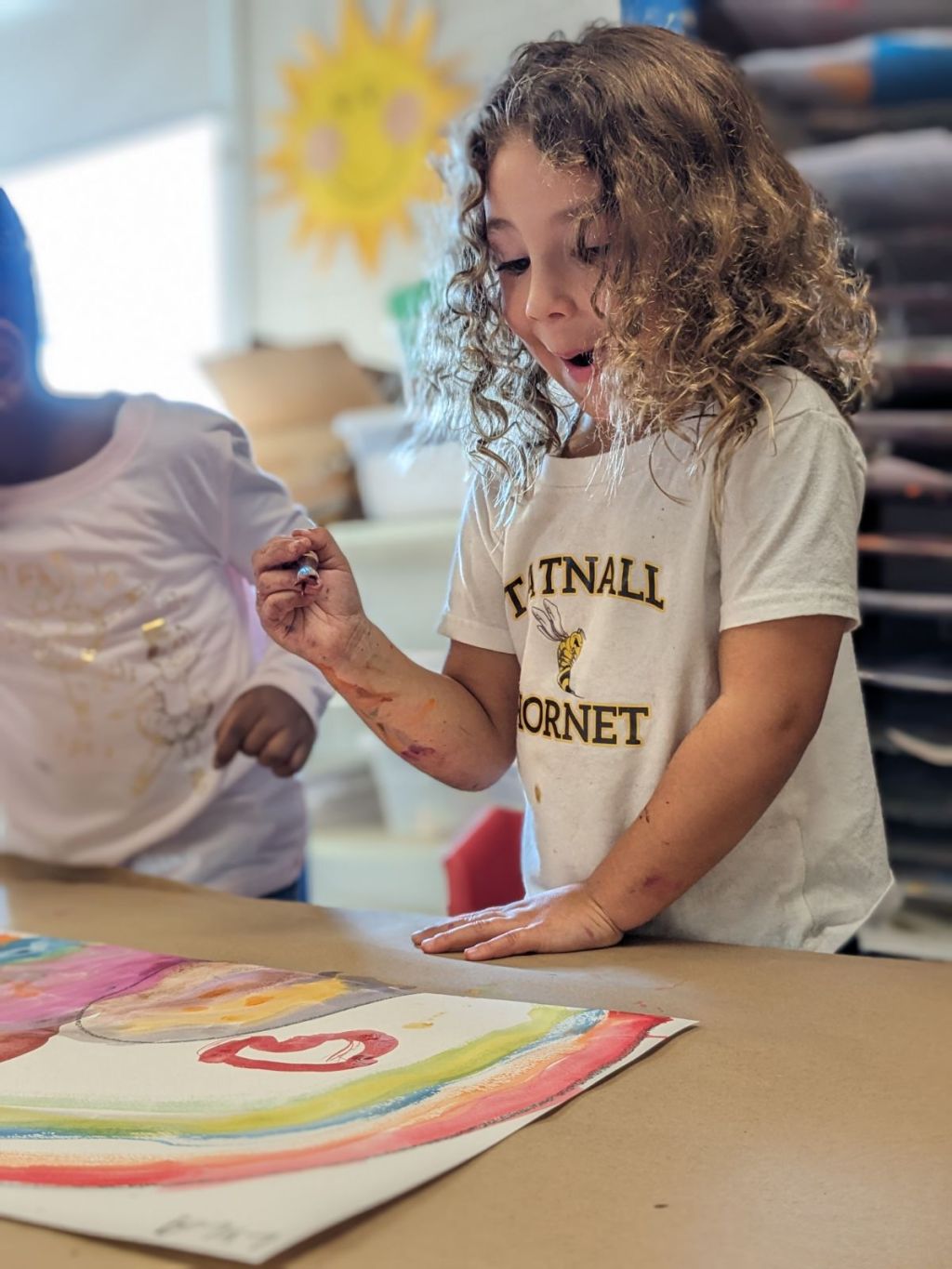
This morning, as I stood at the Donaldson Wing doors, greeting our kindergarten and first-grade students, I experienced something familiar to many parents: a moment of struggle. Lyla, my own kindergartener, had a hard time separating from me. With big crocodile tears in her eyes and a quivering lip, she stood in the doorway, calling out my name. I continued to open car doors, determined to keep the morning upbeat and honestly hoping she would get tired of calling for me and enter her classroom. But quickly, one of our teachers noticed Lyla’s emotions and swept her into the classroom. The children, without missing a beat, rallied around her, welcoming her with smiles and helping her calm down. Before I knew it, she was skipping off to start her day, filled with the joy of being part of this community.
As a parent and an educator, moments like these remind me why I was drawn to Tatnall: our dedication to our core values—curiosity, perseverance, and citizenship. Curiosity and perseverance are often easy to spot in our hallways. You can see them in the questions students ask, the projects they tackle, and the grit they show in their work. Citizenship, though, is more subtle. It’s not always something you can see right away—it’s something you feel. It’s about being committed to the community, supporting one another, and understanding our role in upholding shared values.
Citizenship, in its broadest sense, isn’t intuitive. It’s something we, as parents and teachers, work hard to teach and model for our children. We do this through open discussions, by guiding them through challenging moments, and most importantly, by showing them what it means to be part of something bigger than themselves.
In his book Education for a Civil Society, Dan Gartrell outlines five life skills that help young children become citizens. The first two are what he calls “safety-needs” skills: finding acceptance as a member of a group and learning to express strong emotions in healthy, non-hurtful ways. The other three, “growing-needs” skills, focus on solving problems creatively (both independently and with others), accepting the unique qualities of others, and thinking intelligently and ethically. These skills don’t develop in isolation; they are nurtured with the support and guidance of caring adults.
So, how can we, as parents, help model and foster these skills at home? Gartrell offers some simple but powerful strategies.
- Smile and nod: When your child is speaking, make sure you’re really listening. Smiling and nodding signals that their thoughts and feelings matter.
- Acknowledge and pause: Take a moment to acknowledge a specific detail of their efforts—“You used so many colors” or “You are really taking your time with your homework”—and then pause to let them respond.
- Make time for ‘contact talk’: In the busyness of life, it’s easy for conversations to be all about tasks—“Put on your shoes,” “Grab your backpack.” But it’s equally important to carve out moments for meaningful, connection-focused conversations where you’re simply sharing experiences and bonding.
- Remember names, details, and promises: When we remember the names of our children’s friends or ask about things that matter to them, it shows them that we’re invested. Just as it does for us as adults, this kind of attention makes children feel valued.
At Tatnall, we talk often about the village it takes to raise children. While many lament the loss of that village in today’s world, we are proud to say that we maintain it here. We are a village that supports one another, and we are dedicated to helping our students remain curious, to lean into perseverance, and grow into active citizens. You can feel this sense of community and care the moment you step onto our campus. It’s the feeling that wrapped around my daughter—and me—this morning, turning a hard moment into a joyful one.
Together, we can continue to nurture citizenship in our children, both at school and at home. Let’s keep building that village, hand in hand.


 Home
Home 
Leave a comment