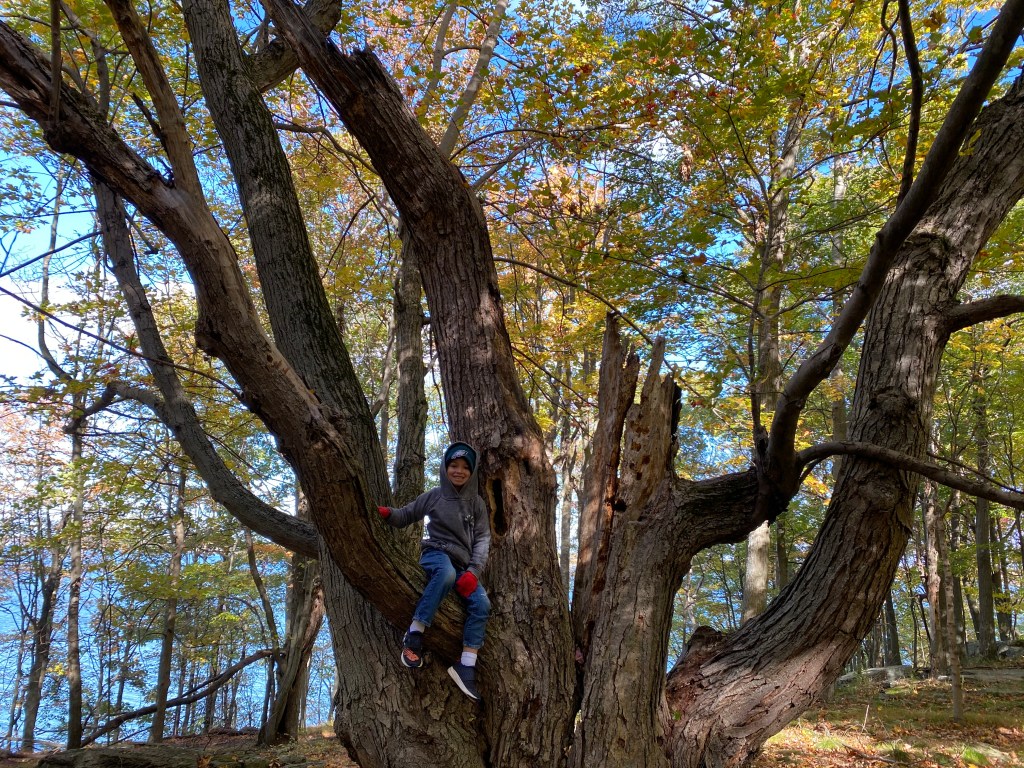
I’ll never forget the moment when my then 5-year-old, Nolan—all “boy” and full of energy—said to me while we were driving to visit my parents in the 1000 Islands, “It’s so peaceful here. My body feels calmer here.” We had just crossed onto the island, surrounded by bright orange and red leaves, and started looking into the woods to spot animals. The rush and pressure seemed to melt away as we entered “river time”—a time for hiking, fishing, outdoor walks, fetch with the dog, puzzles on the porch, and campfires.
“River time” is special, and even Nolan, at just five years old, could sense how good it was for his body and mind. The beauty is that this type of slower-paced, outdoor living doesn’t have to be reserved for vacations. While it may seem challenging in our busy day-to-day lives, the benefits of spending unstructured time outdoors are undeniable.
And Nolan wasn’t wrong. Research shows that outside time is essential for our mental, physical, and academic well-being. The American Academy of Pediatrics highlights several benefits of outdoor time for children and teens:
- Physically healthier: Children tend to play more actively outdoors, which supports their motor development, lowers obesity rates, and reduces the risk of nearsightedness. Plus, a little sunshine helps them get the vitamin D their bodies need.
- More engaged in learning: Outdoor play sparks curiosity, creativity, and critical thinking. Children who spend time exploring nature often show improved learning outcomes.
- Better behavior and mood: Time in natural settings has been linked to reduced anger, aggression, and improved impulse control—especially important during routine changes.
- Mentally healthier: Nature time helps lower stress and depression. Children often show increased focus and reduced ADHD symptoms after spending time outside.
Another resource I love is Balanced and Barefoot by Angela J. Hanscom. She emphasizes how unstructured outdoor play, safe risk-taking, and giving children space can build strong, confident kids. Hanscom describes outdoor free play as “the antidote to your child spending hours indoors staring at screens and to you being too busy and overscheduled to enjoy parenting.”
So, how do we incorporate outdoor time when not on “river time” or vacation? For starters, you’ve already taken a great step by choosing Tatnall. Our 110-acre campus, environmental studies program, and outdoor classrooms offer your child plenty of time to explore, play, and learn outside. But you can also encourage more outdoor time at home. Here are some ideas:
- Encourage your child to play outside right after school or even before school starts. Instead of turning on Netflix, send them outside to shoot hoops, go for a walk, or listen to the birds.
- Plan a weekend day (or even just one day a month) where the whole family stays home and spends time outside together.
- Arrange all-day playdates. When friends come over for the whole day, there’s plenty of time to get creative, explore, and invent new games.
- Gradually allow your child to roam further in safe outdoor spaces, building their independence and confidence.
- Create an “open house” day where friends can stop by without calling ahead—the only rule? Stay outside!
It’s true, our children’s lives look quite different from ours growing up. Some changes are positive, but not all. One thing we can’t afford to lose is the gift of unstructured outdoor time. The benefits are just too important. As Nolan wisely said at the age of 5, “I just feel calmer” when outdoor time is part of the routine.


 Home
Home 
Leave a comment