I have three very different readers in my house. A learned to decode quickly and has become a voracious reader of emotionally-fueled novels. N was slower to decode, but has always been a voracious consumer of knowledge. L is a reader-pleaser. She picks the books she feels her reader will love best. A’s vocabulary is incredible; she consumes so many words daily as she gets lost in her books. N’s vocabulary is incredible, as he has heard non-fiction words used in book after book that I read to him or that he hears on non-fiction podcasts. L’s vocabulary is both incredible, as I carefully fawn over books with meaty content, and too mature, as she is the youngest of three (sigh).
A knew more letters than L did at her age. A was reading longer chapter books at N’s age. A is the first. Did I have more time with her to work on learning letters, writing, and drawing? Absolutely. Did she get more academically-driven mom time than my other two? 100%. Did I, for five minutes, worry that I was failing N as a mom when he was three? Yup! My doctorate advisor might have found me crying in a puddle after his first three-year-old conference. What she said next changed my entire mom-life, and I want to share it with you now.
She reminded me of the landmark 1986 reading study by Keith Stanovich, Matthew effects in reading: Some consequences of individual differences in the acquisition of literacy. She told me, “Kim, he is three. Expose him to a ton of vocabulary, like a ton. Read to him. Read him great picture books. Read him great chapter books. Read him “big-kid” non-fiction books. Then, talk about the books using those great words. And for Pete’s sake, stop comparing your children. You know better.” She then left the office in a huff. There was no time for drama in the space of our relationship.
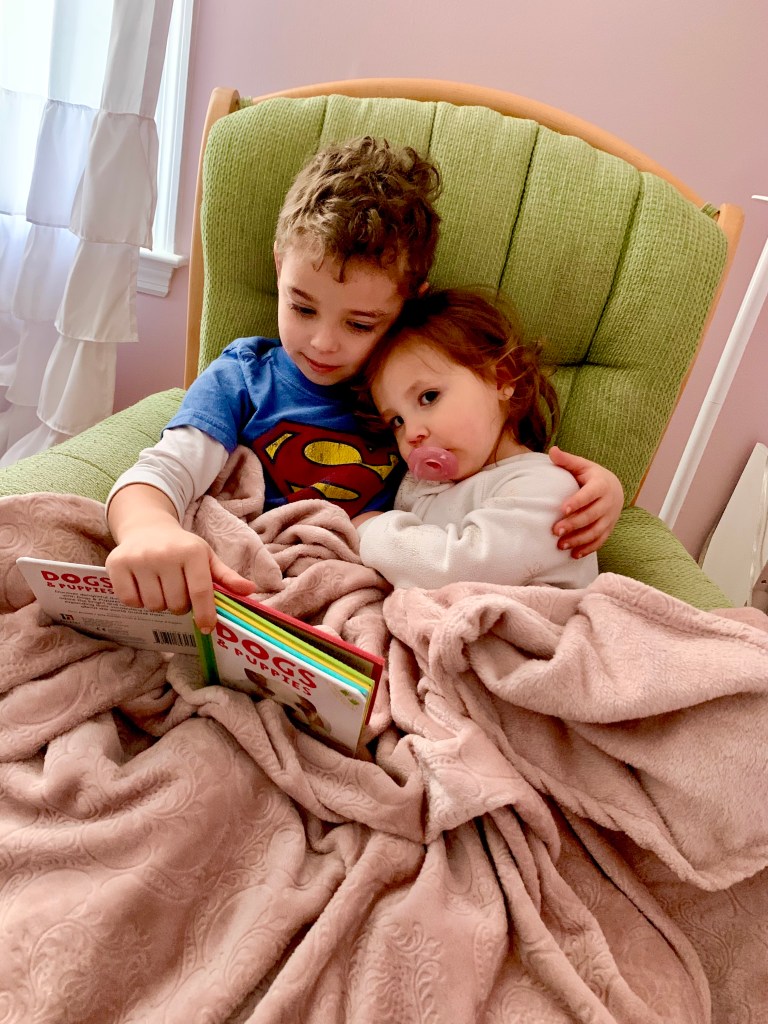
You see, what Stanovich found was that one of the few things all reading research seemed to agree on was that vocabulary knowledge was a pretty big indicator of reading ability. At the heart of this study, Stanovich stated that the greater the volume of reading experience a child had, the greater their vocabulary knowledge was, and conversely, the greater a child’s vocabulary knowledge was, the more reading experiences the child engages in. Hence, the rich get richer, and the poor get poorer… strong readers get stronger, and struggling readers fall further behind. In that puddle on the floor, my advisor helped me realize that I could help my son build his vocabulary knowledge pretty easily, which would have huge benefits down the road. So, I started reading content-heavy books of interest to him. I read every night. I read to him even once his decoding finally took off… which, once he figured it out, took off like a rocket because of his robust vocabulary. I read, and when he was ready, we read, and eventually, he read.
This week, I invite you to read to your child, regardless of their age. Pick a book that might be tough for them to read independently due to the sentence structure, content, or vocabulary, and just read. And then find another book and do it again. Talk about the book. Use the vocabulary. And for Pete’s sake… do NOT compare your children. We all know better!
Originally shared on August 25, 2023






 Home
Home 
Leave a comment